Read Time: 6 minutes
Non-combustible pedestal systems explained. Discover 5 important differences specifiers must understand when selecting safe, code-compliant pedestal solutions.
Introduction: Non-combustible pedestal systems
Non-combustible pedestal systems are becoming more common across rooftop terraces, balconies, and amenity decks as designers explore different ways to meet fire-safety requirements and performance goals. With new materials, new codes, and new types of outdoor spaces, many specifiers want to understand how these systems work and how they compare to traditional plastic pedestals.
Both pedestal types serve important roles in modern construction. Each has its own fire rating classification, material characteristics, and ideal use cases. In this guide, you’ll learn the five key differences between non-combustible pedestals and plastic pedestals—how each system functions, where they’re typically used, and what matters most when selecting the right support system for your project.
1. What is a non-combustible pedestal system?
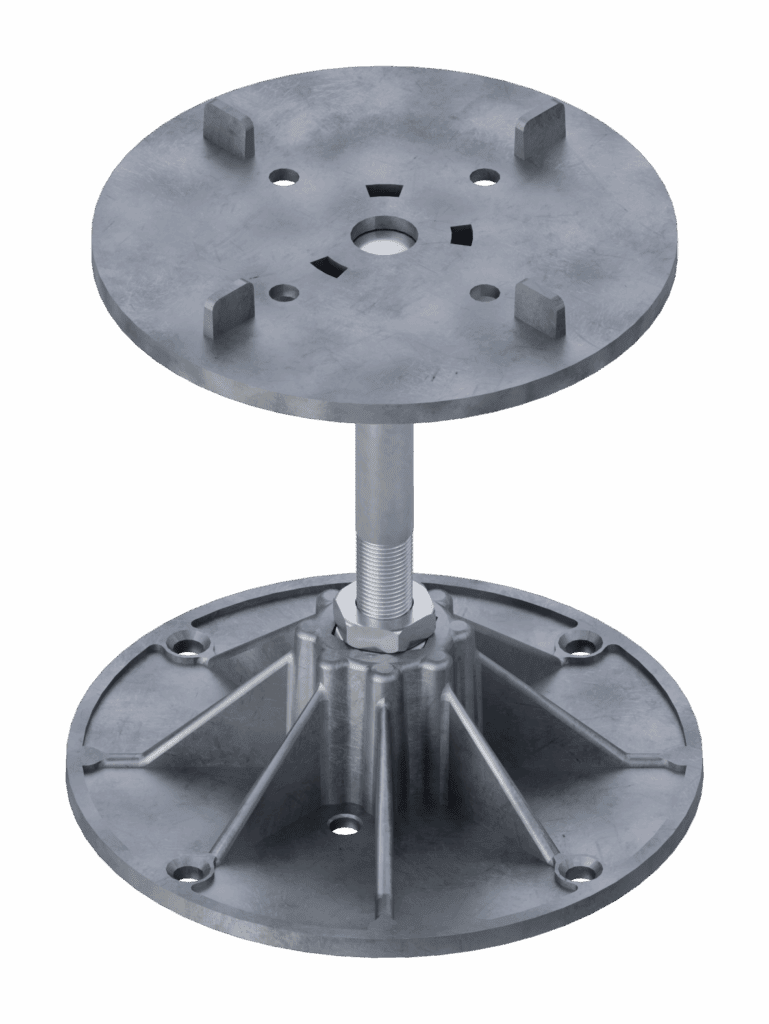
Non-combustible pedestal systems are height-adjustable supports made from materials that do not burn, melt, or contribute to flame spread—typically aluminum, galvanized steel, or other fire-resistant metals. They’re designed to elevate and level rooftop pavers, porcelain tiles, Ipe wood deck tiles, or FRP grates without penetrating the waterproofing. Like other pedestal systems, they use a base, adjustable body, and headpiece to create a stable, level walking surface over sloped substrates. Because they are made from non-combustible materials, these pedestals are often chosen for projects where fire performance is a priority, where Class A deck assemblies are specified, or where the flooring materials themselves are non-combustible.
2. How are non-combustible pedestals adjusted?
Non-combustible pedestals have a nut that can be adjusted up and down using a wrench. They also utilize a lock nut at the bottom that keeps the entire assembly solid and keeps it from moving once it’s in place.
Pro Tip: Keep in mind that labor to adjust these pedestals will typically take more time than the traditional skyjack pedestal system.
3. Side-by-Side Comparison: non-combustible vs. standard skyjack pedestal system
| Category | Non-Combustible Pedestal System | Standard Adjustable Pedestal System |
|---|---|---|
| Fire Rating | Class A (non-combustible) | Class B (highest fire rating for non-metal materials; d0 rated) |
| Weight Capacity | 4,400 lbs | 2,100 lbs |
| Material Makeup | 100% aluminum | Engineered, low-flammable polymer materials |
| Minimum Height | 1-4/7″ | 1/16″ |
| Maximum Height | 7-7/8″ | 37-3/4″ |
| Adjustment Tools Required | Wrench | Drill optional (hand adjustment possible depending on model) |
| Self-Leveling Feature | Built-in | Add-on option |
| Head Diameter | 4.75″ | 5-5/8″ |
| Base Diameter | 5″ | 8-1/4″ |
4. Class A Fire Rated Flooring to Pair with Non-Combustible Pedestal System
Specifiers often assume that choosing a non-combustible pedestal is enough to meet high fire-performance requirements. Not true. Your project’s fire zone classification determines whether the entire system (roofing, pavers, pedestals, and accessories) must meet Class A performance.
When in doubt, check the map. Then check the code. A few minutes upfront prevents costly redesigns, change orders, or compliance issues later. The good news is that you have quite a few flooring options that will meet codes –
- Concrete pavers – Concrete is naturally non-combustible and will meet any code requirements.
- Ipe wood deck tiles – Due to the density and hardness of Ipe wood, it’s naturally class A fire rated.
- Porcelain pavers – Some but not all porcelain pavers meet class A fire ratings. Our entire line of skywalk porcelain pavers have a class A fire rating.
- Other stone pavers – any natural stone materials like granite and marble will be non-combustible
5. How to determine if your area requires a non-combustible pedestal system
Step 1: Check Your Local Building or Fire Department
Start by visiting your city or county building department website and look for terms like:
- Building code
- Fire code
- Wildland–Urban Interface (WUI)
- Fire Hazard Severity Zone (FHSZ)
- Very High Fire Hazard Severity Zone (VHFHSZ)
- Local amendments
These sections usually link directly to the local fire-resistance requirements for roofing and rooftop systems. Since pedestal-mounted systems function as part of the roof assembly, the same fire classifications apply.
Step 2: Identify Whether the Project Is in a Fire-Risk Zone
Most areas that require Class A fire-rated roof systems are clearly mapped. Search for:
- “[City] fire hazard map”
- “[County] WUI map”
- “VHFHSZ map”
If the project site falls within a WUI or VHFHSZ, assume a Class A fire rating is mandatory for rooftop materials—including pavers, support grates, and pedestal systems.
If the site is outside these zones, a Class B rating is typically the baseline requirement unless local code states otherwise.
Step 3: Confirm With a Quick Call or Email
The fastest method is also the simplest:
“Can you confirm whether this address is in a zone that requires a Class A fire-rated roof assembly?”
Most building departments will confirm within minutes. This avoids assumptions and ensures every specifier stays aligned with local enforcement.
*For more information, refer to International Building Code Chapter 15
6. Class A vs. Class B Fire Rating: The Easy Rule of Thumb
To keep things simple:
- Class A = Highest fire protection. Required in WUI, VHFHSZ, and wildfire-prone regions.
- Class B = Moderate fire protection. Generally allowed in standard urban/suburban areas outside fire-hazard overlays.
For rooftop amenity decks, terraces, and outdoor living spaces—where pavers and pedestal systems become part of the roof assembly—this distinction matters more than ever.
7. Final considerations for a non-combustible pedestal system
Cost: A non-combustible pedestal system will cost more for both materials and labor. Adjust your budget accordingly.
Acoustic Considerations: Metal pedestals transmit sound differently than polymer-based pedestals so sound-reduction pads and shims may be wanted.
System Weight: Non-combustible pedestal systems tend to weigh more due to their metal components.
Installation: Adjusting non-combustible pedestals will take longer than using standard pedestals. Their rigidity will make them harder to level and may require more shims.
8. FAQs about Non-Combustible Pedestal Systems
Q: What are non-combustible pedestal systems?
A: Pedestal systems made from materials that do not ignite, melt, or contribute to flame spread, typically metal.
Q: Are non-combustible pedestals required everywhere?
A: No. Only some jurisdictions require them depending on project type, height, and local code amendments.
Q: Are concrete pavers and Ipe wood deck tiles non-combustible?
A: Yes. Concrete pavers are non-combustible, and Ipe wood deck tiles carry a Class A fire rating. Porcelain pavers may also be class A fire rated depending on the manufacturer.
Q: Are plastic pedestals safe for rooftop decks?
A: Yes. SkyJack pedestals are Class B fire rated, which is the highest rating achievable by non-metal materials, and they are d0, meaning no flame spread.
Q: Can non-combustible pedestal systems support the same flooring products as regular pedestal systems?
A: Yes. Any paver or flooring tile that is designed to be installed on top of pedestals can be supported by either pedestal system. The important factor is whether or not the flooring pavers have a class A fire rating.
If you’re looking to specify the skyjack non-combustible pedestal system, please reach out to our team for more information