Read Time: 5 minutes
What Is a Tall Pedestal Bracing System?
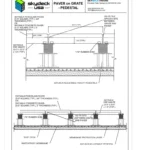
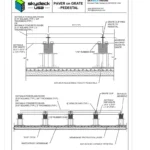
A tall pedestal bracing system is a structural support method used to stabilize pedestals on elevated decking projects when the pedestal height exceeds the safe free-standing limit. It adds rigidity so the deck stays firm under load, even in high-wind or high-movement environments.
You’ll see bracing used on:
- Multifamily rooftop decks
- Commercial pedestrian terraces
- Large format paver systems
- Around rooftop pools where pedestals tend to be very tall
Why Tall Pedestals Require Additional Support
Tall, free-standing pedestals can flex, wobble, or topple with lateral movement if they aren’t properly secured.
Once pedestal heights creep above 22 inches (varies by manufacturer), installers must start thinking in terms of lateral stability rather than just vertical load capacity.
A tall pedestal bracing system solves that problem by distributing movement forces across multiple pedestals instead of allowing one pedestal to act alone.
How a Tall Pedestal Bracing System Works
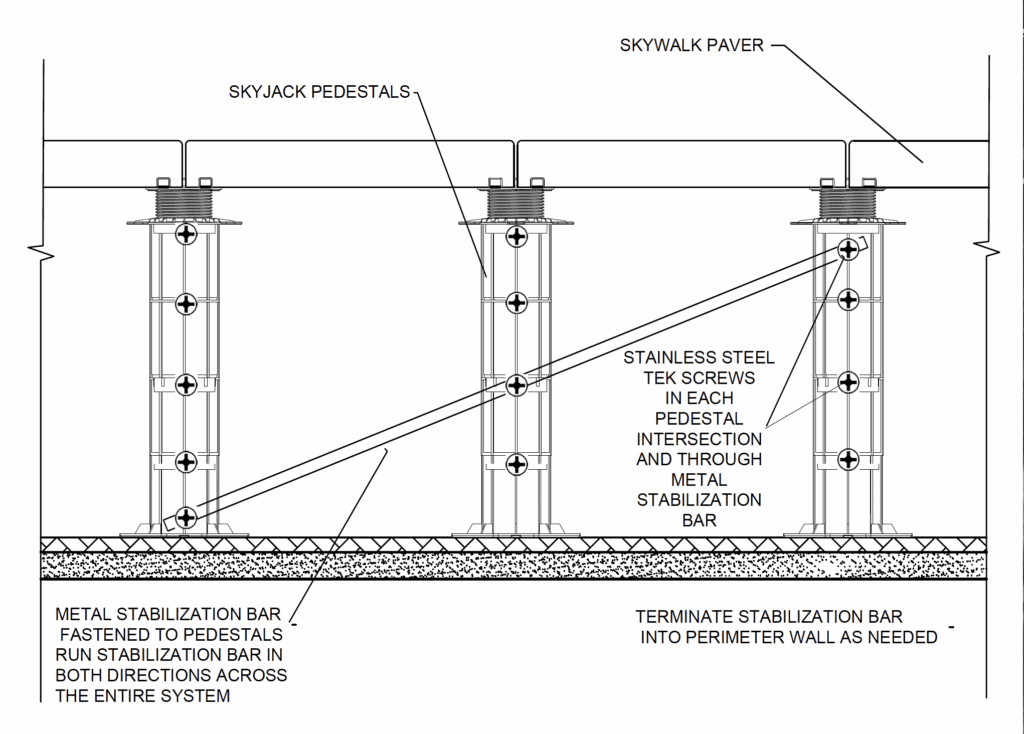
At its core, bracing reduces lateral motion. Most systems use some kind of cross-bracing to connect the pedestals together on a diagonal.
Types of systems:
- Tension cables – cables that are fastened on a diagonal between multiple pedestals
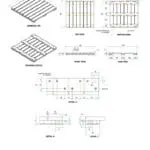
- Aluminum bars – rigid aluminum bars that can be screwed into the side of several pedestals in a row to provide stability and keep pedestals from shifting
- Proprietary plastic stabilization – Other systems make their own plastic molded parts that connect between pedestals
When You Should Use a Bracing System
You should use a tall pedestal bracing system when any of the following apply:
- Pedestal height exceeds your manufacturer’s recommended free-standing limit
- The deck experiences high foot traffic (rooftop bars and restaurants)
- Substrate movement is likely (membranes, tapered insulation, old roofs)
- Wind uplift calculations call for lateral stability
- The surface has extreme slope or elevation changes
Always check with the pedestal manufacturer’s specifications and installation guidelines to confirm safe limits.
Installation Tips for Best Results
1. Assemble your pedestals first
Assemble many of the pedestals to approximate heights prior to starting to lay pavers. This will prevent some of your crew from waiting around since tall pedestal assembly takes longer that when using shorter pedestals.
2. Brace as you go
Add bracing as you install each row of pavers. You will need to ensure the row of pavers is level and square before you add bracing since you can’t adjust the pedestals again once the bracing is in place.
3. Ensure every connection point is mechanically fastened
Wherever you have pieces connecting together, make sure to mechanically fasten them. This will ensure the pedestals won’t have any movement from vibration or impact over time. This will also stabilize the entire system and avoid loose connections which can cause wobbling pedestals.
4. Avoid mixing systems
Each tall pedestal bracing system is designed specifically for that pedestal system. They are not interchangeable between brands.
5. Document everything
Be sure to take photos that show the pedestals, screws, and bracing as you go. This will demonstrate that you have installed the pedestals to specification and avoid needing to lift up already installed pavers for architect or owner inspection and approval.
Conclusion: Build Safer, Smarter, and Stronger
A tall pedestal bracing system keeps elevated decks safe, stable, and long-lasting — especially when heights get extreme. Whether you’re an installer looking for best practices, an architect specifying a system, or a homeowner planning a rooftop transformation, bracing ensures your deck performs the way it should.
If you need help choosing the right system or want a project review, the SkyDeck team is ready.
Build it once. Build it right.
Want to learn more about installing paver pedestal systems? Check out our installation videos on our YouTube channel or other related blogs:
➡️ SkyDeck YouTube Channel: https://www.youtube.com/@SkyDeckUSA
➡️ SkyDeck Blog: The Best adjustable Pedestals for Rooftop Patios: Specifier and Buyer Guidehttps://skydeckusa.com/guide-to-choosing-the-best-adjustable-pedestal/
FAQs about Tall Pedestal Bracing System
Q: What is a tall pedestal bracing system?
A: A bracing system stabilizes tall pedestals by preventing side-to-side movement using cross-bracing, outriggers, or anchors.
Q: When do I need bracing for pedestals?
A: When pedestal height exceeds recommended limits (often 22 inches) or when wind, slope, or movement requires extra stability.
Q: How does a bracing system improve safety?
A: It distributes lateral forces across multiple pedestals, reducing wobble, tipping risk, and uneven loading.
Q: Can homeowners install bracing themselves?
A: Yes, for low-complexity decks. For tall commercial installations, a professional installer is recommended.
Q: Does bracing affect waterproof membranes?
A: Proper systems avoid membrane penetration to preserve roofing membrane manufacturer warranties. Always follow manufacturer instructions for membrane-safe installation.
Click here to check out our pedestal offerings or access CAD and BIM models, and specifications.