
Paver Pedestal Wind Uplift Requirements: What Architects Must Know About Codes, Testing & Rooftop Design
Article Sections
Table Of Contents
-
Introduction: Why Wind Uplift Is So Complex for Rooftop Pedestal Systems
-
Real-World Example: When Specified Systems Can’t Meet the Code
-
The Industry Problem: No Clear National Standard for Pedestal Uplift
-
Skydeck USA’s Testing Initiative: Toward a 157 mph Rated System
-
Conclusion: Moving Toward Clearer, Project-Specific Wind Uplift Guidance
- FAQ’s: Choosing the Right Rooftop Patio Paver for Wind Uplift
- Summary of Key Takeaways: Paver Pedestal Wind Uplift Requirements
Read Time: 6 minutes
Introduction: Why Wind Uplift Is So Complex for Rooftop Pedestal Systems
Wind uplift is one of the most misunderstood aspects of rooftop design, especially when it comes to paver pedestal wind uplift requirements. Architects, engineers, and city reviewers often approach uplift protection using inconsistent standards, leading to frustration, delays, and product mismatches during construction.
The challenge is simple: no nationally accepted standard exists for wind uplift on pedestal-mounted pavers. Until the industry creates one, project teams must rely on engineering judgment, product testing, and the specific conditions of each rooftop deck.
Here’s what every design professional needs to know.
*Watch this video showing how wind uplift can impact porcelain pavers on pedestals*
Why Miami-Dade Isn’t the Right Standard for Most Projects
A common misconception is that all rooftop decks must meet Miami-Dade wind uplift requirements, the strictest in the country. While Miami-Dade testing is important for hurricane-prone regions, applying it universally often results in:
- Overly conservative specifications
- Requiring uplift resistance beyond what most paver pedestal systems can achieve
- Product substitutions that emerge too late in the construction timeline
- Conflicts between architects, engineers, and city inspectors
- Adding unnecessary and significant cost to the overall project
In markets outside high-velocity hurricane zones, Miami-Dade is technically overkill—yet it becomes the default simply because local codes don’t specify an alternative.
How Wind Uplift Works for Rooftop Pedestal Systems
The behavior of pedestal-supported pavers differs significantly from membranes or mechanically fastened roof systems. On a rooftop terrace, there are several project factors that change wind uplift requirements:
- Building height
- Parapet height
- Patio size and openness
- Orientation to prevailing winds
- Wind tunnel effects created by architectural features
Small design adjustments—like rotating the building or the roof deck a few degrees—can dramatically reduce the required uplift resistance.
This is why paver pedestal wind uplift requirements must be evaluated individually for each project rather than applied uniformly.
For more information on how to calculate wind uplift, check out our blog “What is Wind Uplift and How Is It Calculated for Rooftop Pavers”. This article provides a formula that can be used by project architects and engineers to determine paver pedestal wind uplift requirements.

Real-World Example: When Products Can’t Meet the Specified Paver Pedestal Wind Uplift Requirements
Skydeck USA recently supported a large coastal project in South Carolina where multiple pedestal manufacturers were specified. Late in construction, the city required a wind uplift standard that no pedestal system on the market could meet using the designer’s chosen paver product.
With the building already underway, the only solution was:
➡️ Hire an engineer to write a judgment letter stating the system is reasonably expected to meet the requirement.
This is becoming increasingly needed as city inspectors and engineers apply strict standards on individual projects without doing the specific legwork to determine what wind uplift that project really needs.
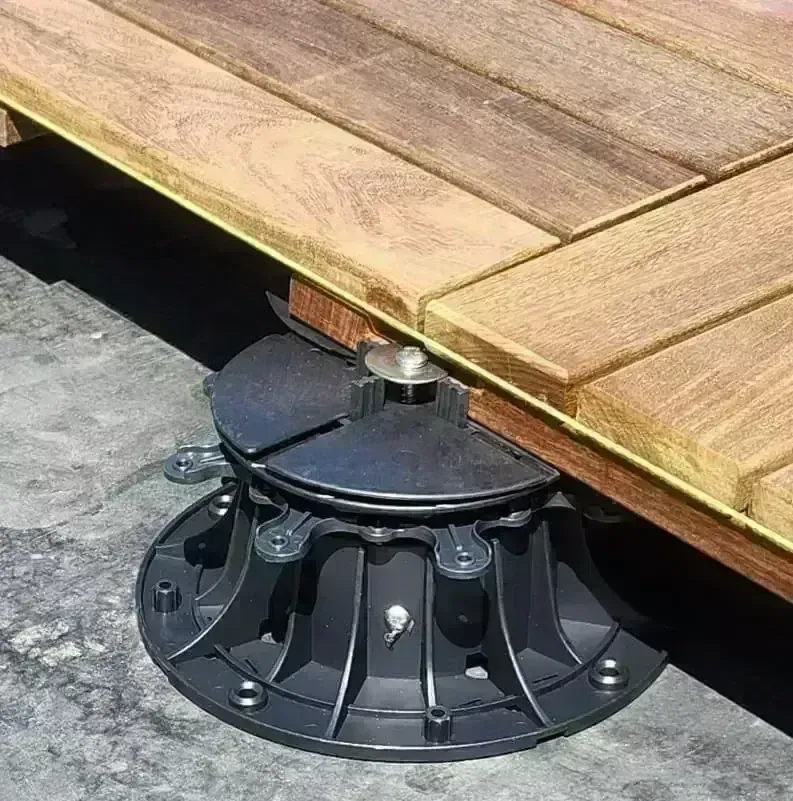
Wind Uplift Lock Down for Ipe Wood Deck Tiles
The Industry Problem: No Consistent Code for Paver Pedestal Wind Uplift Requirements
The reason architects struggle is the absence of:
- A unified national standard
- Widely accepted testing protocols
- Clear documentation for rooftop deck uplift risk
As a result, engineers often default to the strictest available benchmark—even when it doesn’t apply—because it feels safer than guessing.
But this approach creates additional problems:
cost overruns, redesigns, and specifications that are simply unachievable with current products.
Skydeck USA’s Wind Uplift Testing Initiative
Skydeck USA is working to expand testing and validate uplift performance across multiple flooring types—concrete pavers, wood tiles, porcelain, and turf over grates. Our goal is ambitious:
A system rated up to 157 mph wind speeds across all major rooftop finishes.
We are collaborating with wind uplift specialists across the country. Whether the 157 mph benchmark is universally achievable remains unknown, but our testing aims to deliver clarity the industry has been lacking.
When fully completed, our data will help architects specify pedestal systems and wind uplift solutions with confidence and accuracy.
What Architects Should Do Right Now
Until comprehensive codes exist, here are the best strategies for navigating paver pedestal wind uplift requirements:
✔ 1. Consult early with an engineer to determine the exact wind uplift needed for the specific project
By doing basic calculations, an engineer may be able to advise a parapet height, angle of the building or patio and what requirements a system will need to meet before a project goes out to bid.
✔ 2. Avoid defaulting to Miami-Dade unless truly needed
With very few systems on the market being able to meet hurricane wind uplift standards, it leads to unnecessary complications and adds unexpected costs late in the project.
✔ 3. Consider orientation, parapet height, and site-specific geometry
Small changes can significantly reduce uplift force. An engineer should be able to do these calculations at the beginning of the design phase to avoid major changes late in the project.
✔ 4. Include clear specification notes
Paver pedestal manufacturers will need to know if wind testing is required and if so, what wind speeds it needs to meet. Keep in mind that most systems have not been “wall of wind” tested. So, requiring testing data will significantly reduce your system options.
✔ 5. Ensure the specified manufacturer can meet the exact paver pedestal wind uplift requirements for your project
Many manufacturer websites give generic information about being able to mitigate wind uplift. But, before specifying a product, work with the manufacturer to receive specific testing information that demonstrates their ability to meet the wind uplift requirements for your project.
Conclusion: A Path to Clearer Guidance
The industry is moving toward better testing, clearer language, and consistent standards for rooftop wind uplift. Until then, meeting paver pedestal wind uplift requirements will continue to be project-specific and often subjective.
Skydeck USA is committed to leading the way in testing, education, and system design—so architects can specify pedestal systems confidently, without over-engineering or unnecessary cost.
If you’d like updates on our wind uplift certification timeline or need help evaluating a specific project, we’re here to support you.
FAQ’s: Choosing the Right Rooftop Patio Paver for Wind Uplift
Q1: What are the paver pedestal wind uplift requirements in my area?
A: Wind uplift requirements vary by location, building height, parapet height, and rooftop geometry. There is currently no national standard specific to pedestal-mounted pavers, so uplift resistance is typically determined by the project engineer or local jurisdiction.
Q2: Does my rooftop deck need to comply with Miami-Dade wind uplift standards?s?
A: In most markets, no. Miami-Dade requirements are the strictest in the U.S. and are typically intended only for hurricane-prone regions. Many architects default to these standards due to a lack of clearer local guidance.
Q3: How is wind uplift calculated for rooftop paver systems?
A: Engineers calculate uplift forces based on:
Local wind speed maps
These factors determine whether additional mechanical fastening or ballast is required.
Building height
Parapet height
Patio size and location
Orientation to prevailing winds
Exposure category (B, C, or D)
See the blog post “What is Wind Uplift and How Is It Calculated for Rooftop Pavers” for the exact formula and more detailed information to assist in determining paver pedestal wind uplift requirements for your project.
Q4: What factors increase wind uplift risk on a rooftop deck?
A: Uplift risk increases when a deck is:
Designed with large open terrace areas. These conditions allow wind to flow under or around the pavers more aggressively.
Located at the top of a tall building
Exposed on all sides
Lacking tall enough parapet walls
Facing prevailing winds or have conditions that create a wind tunnel effect
Q5: Can rotating or redesigning a rooftop patio reduce wind uplift requirements?
A: Yes. Small changes in deck orientation or layout can significantly reduce the uplift pressures. Even a few degrees of rotation or the addition of a taller parapet can lower the required protection.
Q6: Are there tested wind uplift ratings for pedestal paver systems?
A: Most manufacturers have limited uplift testing, and there is no industry-wide standard for a wind uplift paver. Skydeck USA is actively pursuing expanded testing to achieve ratings up to 157 mph, covering multiple paver and decking materials.
Q7: What happens if the specified pedestal system cannot meet the required wind uplift rating?
A: In these situations, architects typically:
Request an engineering judgment letter. This issue is increasingly common due to unrealistic or non-applicable uplift standards.
Modify the product selection
Revise the uplift requirement
Add mechanical fastening or grates (keep in mind that this will increase cost that may not be figured into the original estimates).
Q8: Do different paver materials have different uplift performance?
A: Yes. Concrete pavers, porcelain pavers, wood tiles, and turf-over-grates all respond differently to wind. Weight, size, and surface profile all influence uplift behavior.
Q9: When should I use mechanical fastening for pavers on pedestals?
A: Mechanical fastening (like wind plates, clips, or screws) is typically required when:
Local code officials require additional resistance
Uplift forces exceed the weight of the paver
The project is in a hurricane or coastal wind zone
The deck is tall and fully exposed
Q10: Do different paver materials have different uplift performance?
A: Yes. Concrete pavers, porcelain pavers, wood tiles, and turf-over-grates all respond differently to wind. Weight, size, and surface profile all influence uplift behavior.
Q11: Why do different engineers give different wind uplift requirements for the same building?
A: Because there is no standardized uplift code for pedestal systems, engineers often interpret available guidelines differently. One may default to Miami-Dade; another may apply ASCE 7 more conservatively.
Q12: How can architects avoid wind uplift conflicts late in a project?
A: Best practices include:
Coordinating with structural engineers and local code officials before design is finalized
Consulting pedestal manufacturers early
Specifying uplift resistance explicitly using exact calculations for the project conditions
Confirming compatibility of specified paver pedestal system and wind uplift requirements
Avoiding overly conservative default language
Q13: Do I need wind uplift support on a small residential rooftop deck?
A: Sometimes. Local wind zones, parapet height, and building exposure still matter, but many smaller decks experience lower uplift because the surface area is small, often protected on multiple sides and lower to the ground. If in doubt, consult an engineer to do specific calculations.
Q14: Are fiberglass grates required for wind uplift?
A: Not always—grates are typically designed for load bearing but grates can be a part of the overall wind uplift system depending on the manufacturer and the type of flooring product being used.
Q15: What is the industry doing to create consistent wind uplift standards?
A: Manufacturers, engineers, and testing labs are collaborating to establish unified testing methods. Skydeck USA is working with national wind experts to produce reliable data so architects can specify pedestal systems with confidence.
Q16: Are there lightweight pavers that resist wind uplift?
A: Yes, weight is actually not the only way to achieve wind uplift protection with a paver pedestal system. Ipe wood deck tiles provide lightweight paver wind uplift resistance due to the gaps between slats which allow wind through them and reduce wind uplift pressure.
Summary of Key Takeaways: Paver Pedestal Wind Uplift Requirements
There is no single national standard for paver pedestal wind uplift requirements, which leads to inconsistent interpretations by engineers, code officials, and manufacturers.
Miami-Dade standards are often unnecessarily strict for most regions, yet they are frequently applied by default due to the lack of more appropriate guidance.
Wind uplift behavior on pedestal-mounted pavers is highly project-specific, influenced by building height, parapet height, terrace orientation, exposure category, and rooftop geometry.
Small design adjustments—such as parapet height or orientation changes—can significantly reduce uplift forces, preventing overengineering and costly system requirements.
Many paver pedestal wind uplift requirements specified today exceed the tested capacity of currently available pedestal and paver systems, which can force late-stage redesigns or engineering judgment letters.
Product selection matters. Concrete, porcelain, Ipe wood tiles, and turf-over-grates all respond differently to uplift and may require different forms of mechanical fastening or adhesive.
Manufacturers, including Skydeck USA, are actively expanding uplift testing to establish clearer benchmarks and eventually offer systems rated for extreme wind speeds (targeting up to 157 mph) as well as bearing load.
Architects can reduce risk and avoid uplift conflicts by consulting with pedestal manufacturers early, documenting uplift intent clearly, and ensuring that paver selections match anticipated wind loads.
Until industry-wide standards are developed, paver pedestal wind uplift requirements will remain largely dependent on local engineers and inspectors—making proactive communication essential.
Helpful Links: Miami-Dade Building Code for Roof Assemblies, Skydeck USA Products, Skydeck USA Specs and Tile Tech Sheets, Contact Us Page, Estimate Requests