The “Cool Roof” Effect: Reducing Urban Heat Islands with Elevated Paver Systems
Article Sections
Table Of Contents
-
Introduction: The Urban Heat Island (UHI) Challenge
- What Is the Urban Heat Island Effect?
- How Traditional Roofing Materials Increase Heat Gain
- How Elevated Paver Systems Help Reduce Rooftop Heat
-
The Science Behind Elevated Paver Cool Roofs
- Solar Reflectance Index (SRI) Explained
- The Air Gap Advantage and Ventilating Chimney Effect
- Thermal Emittance and Heat Release Performance
-
Building Performance and Green Standards
- Reduced Cooling Loads and HVAC Demand
- Waterproofing Membrane Protection
- LEED and Sustainable Building Alignment
-
Environmental and Urban Benefits
- Reducing Ambient Urban Temperatures
- Extending Roof Lifespan
- Creating Functional Rooftop Spaces
-
Skydeck USA’s Implementation Process
- Site-Specific Thermal and Climate Consultation
- Project Coordination and Installer Support
-
Conclusion: Engineering a Cooler Future
- Why Elevated Paver Systems Matter
- Designing More Efficient Rooftops with Skydeck USA
I. Introduction: The Urban Heat Island (UHI) Challenge
Cities are getting hotter.
In dense urban environments, buildings, roads, and dark roofing materials absorb and trap heat throughout the day. This creates what’s known as the Urban Heat Island (UHI) effect, where city temperatures become significantly hotter than surrounding rural areas.
The impact goes far beyond comfort.
Urban heat islands increase:
- Building cooling costs
- HVAC energy consumption
- Roof surface temperatures
- Stress on building materials
- Public health risks during extreme heat events
Traditional roofing systems make the problem worse. Dark membranes and non-reflective roofing materials absorb large amounts of solar heat and transfer that heat directly into the building below.
That’s where elevated paver systems provide a smarter solution.
Skydeck USA’s elevated paver systems help reduce rooftop heat buildup by combining reflective surface materials with ventilated pedestal assemblies that improve thermal performance across the entire roof system.
The result is a cooler, more energy-efficient rooftop environment that benefits both the building and the surrounding urban area.
II. The Science Behind Elevated Paver Cool Roofs
The cooling performance of an elevated paver system comes from several important design principles working together.
Solar Reflectance Index (SRI)
One of the biggest factors in rooftop heat reduction is the Solar Reflectance Index, or SRI.
SRI measures how well a surface reflects solar heat and releases absorbed heat back into the atmosphere.
Light-colored porcelain and concrete pavers typically offer much higher SRI values than traditional dark roofing materials. Instead of absorbing heat, they reflect a larger percentage of solar radiation away from the building.
This helps keep rooftop surface temperatures significantly lower during peak sun exposure.
The Air Gap Advantage
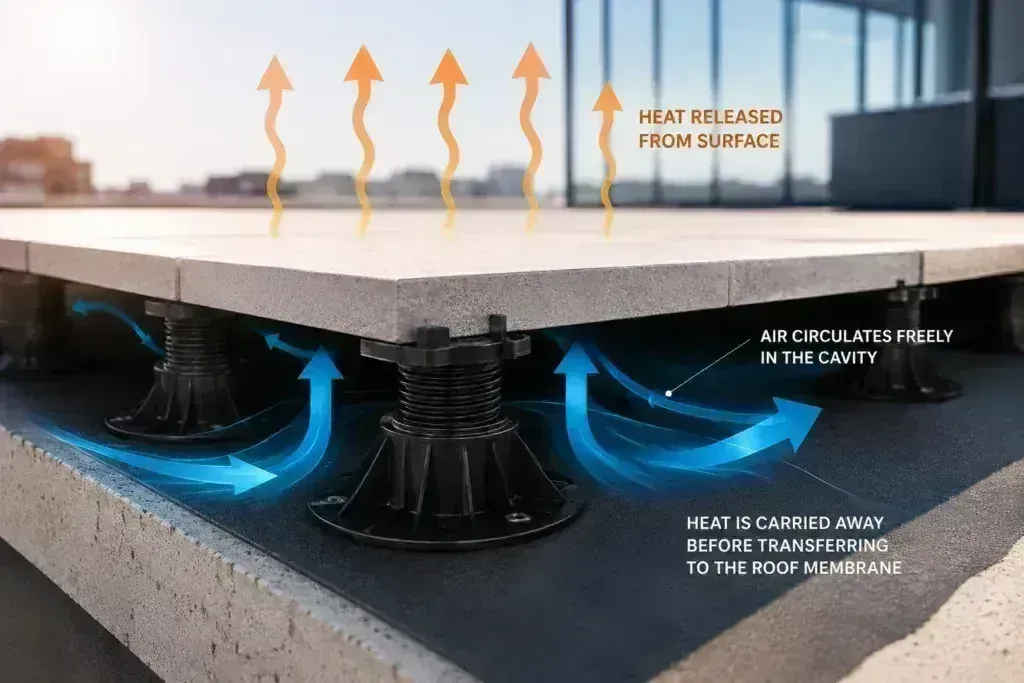
One of the most important cooling benefits of an elevated paver system is the air gap created between the paver surface and the waterproofing membrane below.
Unlike traditional roof systems where the finished surface sits directly on the membrane, pedestal systems create continuous airflow underneath the pavers.
This creates a natural ventilating “chimney effect.”
As heat rises, air moves through the cavity beneath the pavers and helps carry heat away from the roof assembly before it transfers into the building.
That ventilation layer is one of the biggest reasons elevated paver systems perform so well in hot climates and urban environments.
Thermal Emittance
Elevated paver systems also improve thermal emittance.
In simple terms, this means the rooftop surface can release absorbed heat more efficiently instead of trapping it.
Traditional asphalt and roofing membranes tend to hold heat for long periods of time, especially after sunset.
Elevated pavers release heat more effectively because air circulates around and beneath the surface instead of trapping heat directly against the roof.
This helps reduce nighttime heat retention, which is a major contributor to urban heat island conditions.
III. Building Performance and Green Standards
The benefits of elevated paver systems go beyond rooftop temperature reduction.
Reduced Cooling Loads
By limiting heat transfer into the building envelope, elevated paver systems help reduce indoor cooling demand.
Lower rooftop temperatures mean:
- Reduced HVAC workload
- Lower energy consumption
- Improved occupant comfort
- Reduced peak cooling demand during hot weather
Over time, these energy savings can create meaningful operational cost reductions for building owners.
Membrane Protection
Elevated pavers also help protect the waterproofing membrane underneath.
Traditional exposed roofing membranes experience constant UV exposure, thermal cycling, and extreme surface temperatures.
Elevated paver systems shield the membrane from:
- Direct sunlight
- UV degradation
- Thermal shock
- Expansion and contraction stress
This helps extend roof lifespan and reduce long-term maintenance costs.
LEED Alignment
Cool roof and elevated paver systems can also contribute toward LEED and sustainable building goals.
Depending on the project and material selection, elevated pedestal systems may support credits within:
- Sustainable Sites (SS)
- Energy & Atmosphere (EA)
High-SRI materials, reduced heat island impact, and improved building energy performance all support broader sustainability initiatives in modern construction.
IV. Environmental and Urban Benefits
The impact of cool roof systems extends beyond individual buildings.
Ambient Cooling in Urban Areas
When more buildings reduce rooftop heat absorption, surrounding air temperatures can decrease as well.
In dense urban environments, elevated paver systems can help reduce localized heat buildup and contribute to cooler city conditions overall.
While one roof alone will not solve the urban heat island problem, widespread adoption of reflective and ventilated rooftop systems can make a measurable difference.
Extended Roof Lifespan
Reducing direct solar exposure on waterproofing systems significantly improves roof durability.
By shielding the membrane beneath the pavers, elevated systems help reduce:
- Premature aging
- Thermal cracking
- UV damage
- Maintenance frequency
This extends the usable life of the roofing system and improves long-term building performance.
Functional Rooftop Spaces
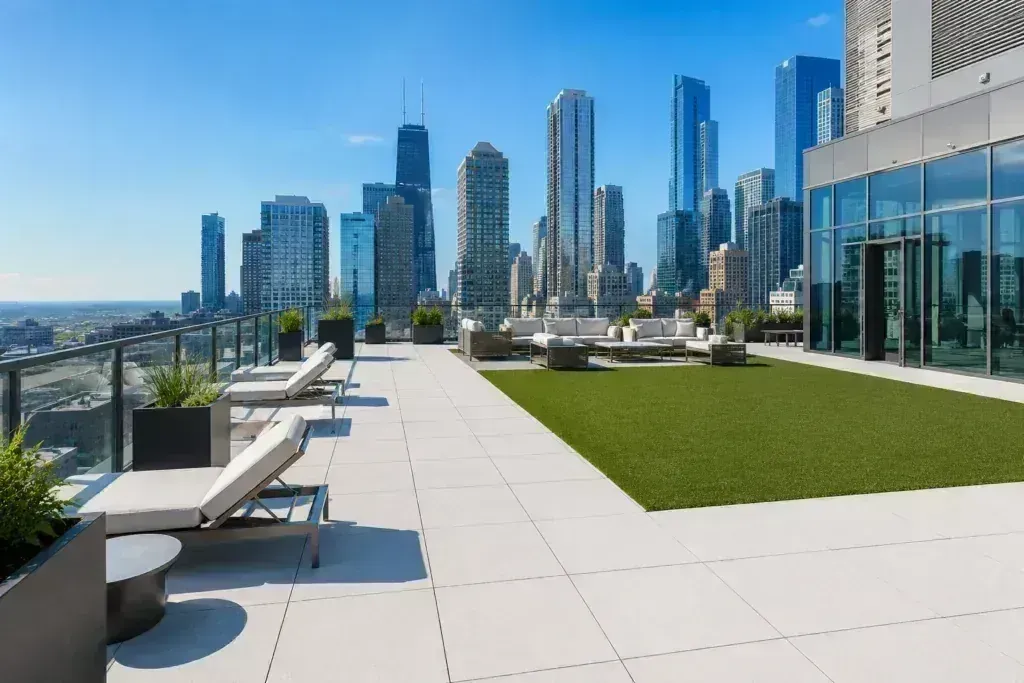
Elevated paver systems also transform unused rooftops into functional outdoor environments.
Instead of absorbing and radiating heat, rooftops can become:
- Amenity decks
- Outdoor lounges
- Green roof spaces
- Rooftop patios
- Walkable architectural environments
These spaces remain more temperature-regulated and significantly more comfortable than exposed roofing surfaces.
V. Skydeck USA’s Implementation Process
A high-performing cool roof system requires more than just materials. It requires proper planning and engineering.
Site-Specific Material Selection
Skydeck USA can work with clients to evaluate climate conditions, rooftop exposure, and project goals to help determine the best materials for your project.
This helps ensure the right combination of:
- Paver color
- Surface finish
- Reflectivity
- Thermal performance
for each individual project.
To check out our roof cooling roof paver options, visit our website:
Project Coordination and Installer Support
Skydeck USA works closely with contractors, architects, and project teams to help streamline the installation process.
This includes:
- Pedestal layout planning
- Shop drawings with mapped pedestal heights
- Material delivery coordination
- Installation guidance
- System planning focused on installation efficiency and long-term rooftop performance
The result is a rooftop system designed not only for aesthetics, but also for energy efficiency, roof membrane protection and long-term performance.
VI. Conclusion: Engineering a Cooler Future
Urban heat islands are becoming a bigger challenge every year.
Building owners, architects, and contractors are under increasing pressure to improve energy efficiency, reduce rooftop heat buildup, and create more sustainable buildings.
Elevated paver systems offer a solution that is both environmental and functional.
By combining reflective surfaces, ventilated airspace, membrane protection, and usable rooftop design, Skydeck USA helps create cooler, more efficient rooftop environments that perform long-term.
And with complete layout planning and installer support, those systems are also faster and easier to install.
Visit SkydeckUSA.com for product specifications, cool roof design support, and elevated paver system guidance.